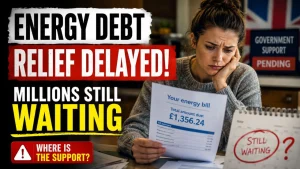

The rising cost of electricity and gas has pushed many UK families into financial stress. Over the past few years, support schemes were introduced to help people manage unpaid energy bills and avoid deeper debt. However, thousands of households are still waiting for financial assistance to arrive. These payment hold-ups have become a serious concern, especially for low-income families already struggling with daily expenses. As utility costs remain high, many people are wondering why the process is taking so long and when proper help will finally reach them.
Table of Contents
Energy Debt Relief Delays
Energy Debt Relief Delays continue to affect households across the UK as suppliers and support programs deal with a growing number of applications. Many families applied for grants, repayment support, or emergency assistance months ago but still have not received a final update. In several cases, customers say they are being asked for additional documents repeatedly, which slows the process even more. Consumer groups believe the current system is failing vulnerable households that need urgent help. With unpaid energy debt increasing nationwide, experts are calling for faster approvals, better communication, and clearer guidance so struggling customers can access support before their financial situation becomes worse.
Rising Demand for Energy Support
One of the biggest reasons behind the delays is the huge increase in people asking for help. As living costs continue to rise, more households are turning to energy support schemes to manage overdue bills.
Energy suppliers were not fully prepared for such a high number of applications. Many customer support teams are now dealing with long backlogs, causing delays in reviewing forms and processing payments.
At the same time, households facing financial pressure are applying for multiple support programs, which has added more strain to the system.
Why Payments Are Taking Longer
Several factors are slowing down support payments. Most suppliers have to check a customer’s account history, income details, and debt level before approving assistance. This process can take time, especially when thousands of applications arrive together.
Staff shortages are also affecting response times. Many providers are struggling to manage customer calls, email requests, and support applications all at once.
In some situations, applications are delayed because of missing paperwork or incorrect account details. Even small errors can move a case further back in the queue.
Funding pressure is another issue. Some hardship programs have limited budgets, so providers often review urgent cases first before approving standard applications.
Impact on Vulnerable Households
Delayed payments are creating serious problems for vulnerable families. Many people who applied for help are already behind on bills and depend on support to avoid deeper debt.
Some households have reduced heating usage to save money, while others are struggling to keep up with repayment plans. Consumer advocates say the stress caused by delayed financial support is affecting both mental and physical wellbeing.
Older adults, disabled residents, and low-income families are among the groups facing the biggest challenges. For many of them, waiting months for assistance can make recovery much harder.
Energy Suppliers Facing Pressure
Energy companies are also under growing pressure as customer debt levels continue to increase across the UK. Suppliers are trying to support struggling households while managing their own operational costs.
Many providers have expanded hardship funds and introduced flexible repayment plans. However, the number of requests remains extremely high.
Industry experts say suppliers are balancing customer support with strict financial regulations and reporting requirements. While companies are attempting to improve processing times, many customers still report poor communication and delayed updates.
Common Problems Reported by Customers
Many households waiting for support have shared similar complaints about the process.
Common issues include:
- Long waiting times for application decisions
- Limited communication from suppliers
- Difficulty reaching support teams by phone
- Confusing eligibility rules
- Delayed grant payments after approval
Some customers say they receive automated replies without any clear timeline. Others report being transferred between departments without getting proper answers.
Support Schemes Available to UK Households
Despite the delays, there are still several support options available for households dealing with unpaid energy bills.
Available support may include:
- Supplier hardship grants
- Flexible repayment arrangements
- Government cost-of-living support
- Emergency fuel vouchers
- Debt advice from financial charities
Experts recommend contacting energy providers early rather than waiting for debt to grow. In many cases, suppliers can arrange temporary payment reductions or offer repayment support.
Debt advice organizations are also helping people understand their options and complete applications correctly.
Consumer Groups Calling for Faster Action
Consumer rights groups believe the current support system needs major improvements. Many organizations argue that households in financial difficulty should not have to wait months for emergency assistance.
Advocates are pushing for faster application systems, clearer eligibility checks, and better communication from suppliers. Some experts also support automatic payments for people already receiving government benefits.
There are concerns that continued delays could reduce public trust in energy support programs. Consumer groups say faster action is necessary to prevent more households from falling into long-term debt.
What Households Can Do While Waiting
People waiting for support payments are encouraged to stay in contact with their energy supplier. Ignoring bills or warning notices can sometimes make the situation more difficult later.
Keeping copies of emails, application forms, and payment references may help if there are processing issues. Financial advisers also recommend checking eligibility requirements carefully before applying.
Free debt support services are available across the UK for households needing additional guidance. These organizations can help people negotiate affordable repayment plans and understand available financial support.
Future Concerns Around Energy Debt
Energy costs remain a major concern for many UK households, especially as living expenses continue to rise. Experts warn that delayed support payments could lead to higher levels of unpaid debt over the coming months.
Many consumer groups believe long-term reforms are needed to improve how assistance programs operate. Faster systems, simpler application processes, and stronger coordination between suppliers and government agencies may help reduce delays in the future.
As more households continue seeking help, pressure is growing on both energy companies and policymakers to provide quicker and more reliable support.